01
Educate
AI Training
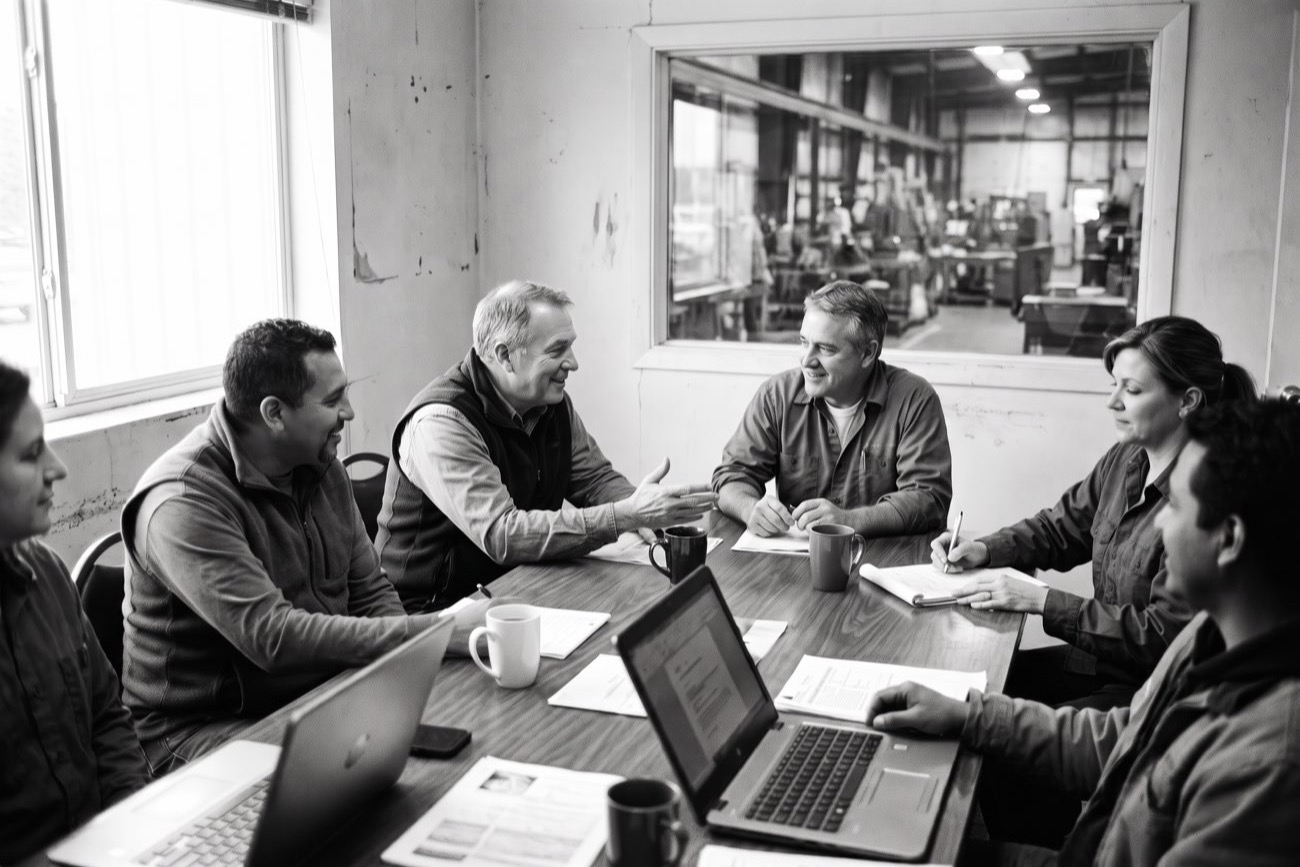
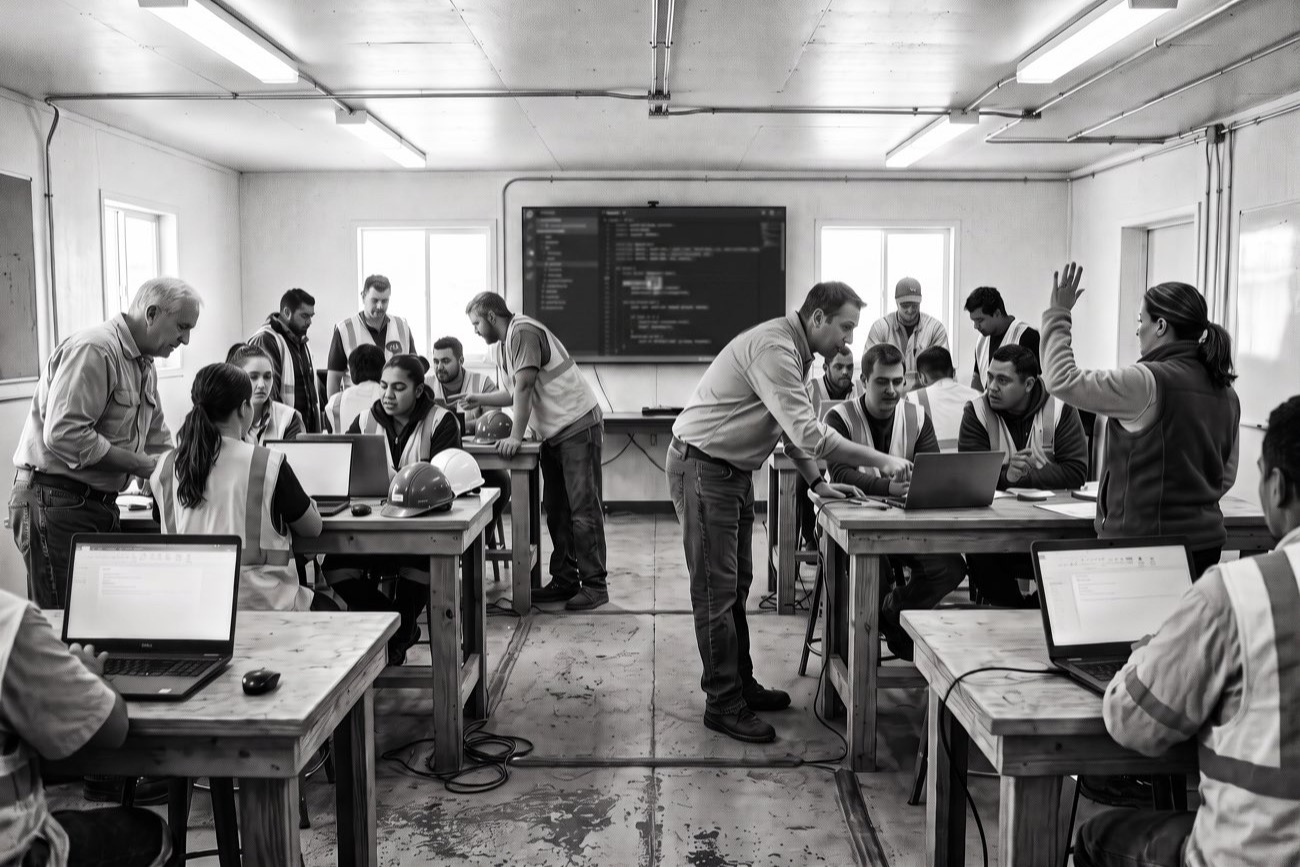
Build practical AI fluency and internal champions who can guide responsible use. Hands-on briefings and workshops use examples from your own operation, so leaders make informed decisions and employees improve real work. Typically, a workshop produces a ranked list of opportunities. The strongest ones then move into a closer look at how the work happens, a focused pilot, and an internal team to carry it forward.
- AI Briefings — opportunities, risks, and priorities in plain English, before budget or action.
- AI Use Case Identification — a working session that typically surfaces 25 to 50 ranked opportunities.
- AI 101 — hands-on fundamentals with ChatGPT and Claude, taught on each department’s real tasks and examples.
- AI 102 — build reusable Skills (written playbooks your AI follows), connect them to your systems, and put agents to work with human approval built in. No coding required.
- AI Builder — advanced hands-on training in AI coding tools such as Claude Code and Codex, plus agent coding fundamentals. Your team builds real applications during the session.
Formats: 90-minute leadership briefings, half-day interactive workshops, or full-day builder intensives.
02
Build
AI Workflow Design & Implementation
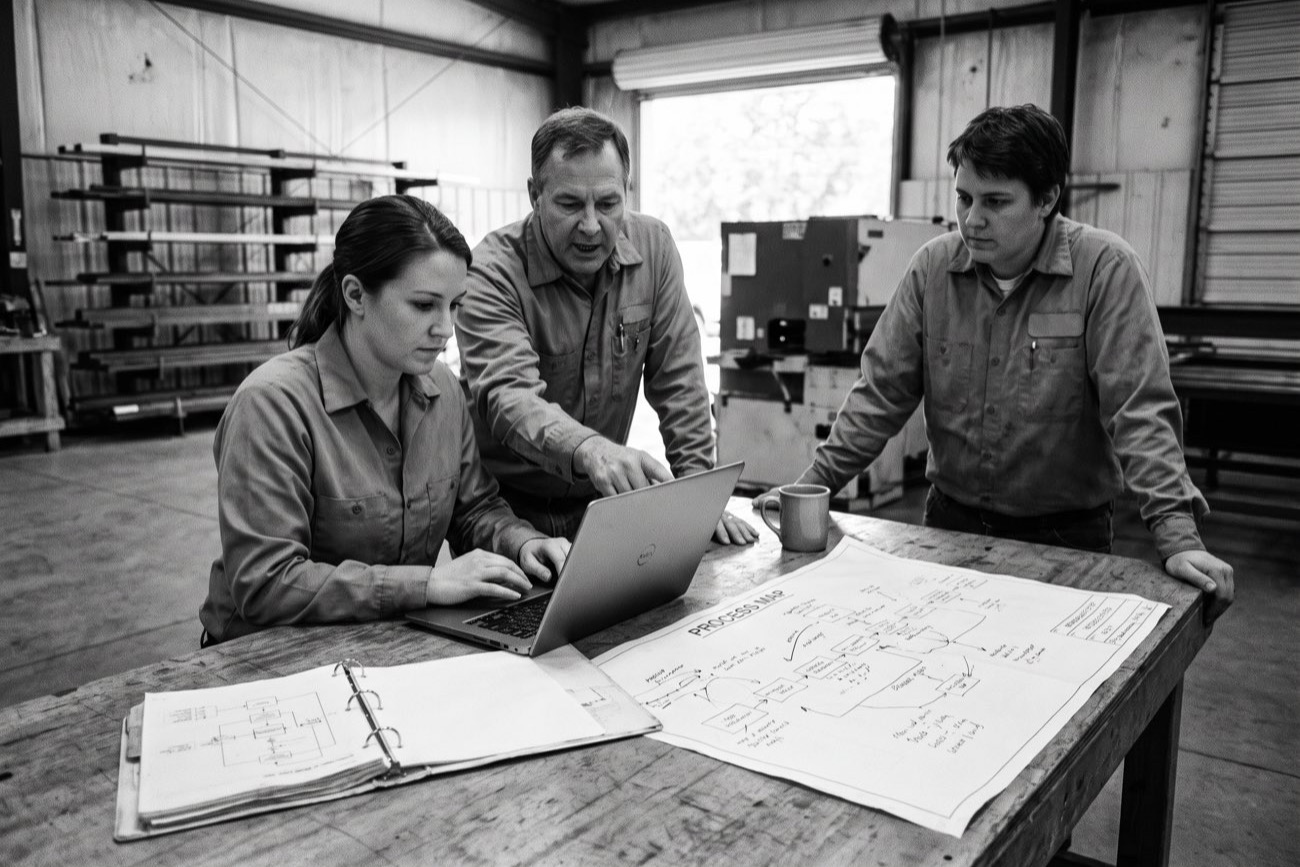
Improve one operational workflow with an experienced builder working alongside your operators and subject-matter experts. We map how the work actually happens and identify the bottleneck that sets the pace of everything else. Then we build a controlled workflow around your existing systems and company knowledge. You approve each stage before we continue.
- Workflow discovery — across people, documents, systems, decisions, and exceptions, verified against your real documents, spreadsheets, and legacy tools, not just interviews.
- Data inventory and readiness — when data isn’t captured cleanly at the source, we fix capture before building anything on top of it.
- A decision on every step — stay human, be standardized, use AI assistance, or become a full AI Skill—a reusable written playbook your AI follows. We name what stays human first.
- Process before automation — we improve the process before automating it, and we check what your existing systems can already do before building anything new.
- Workflow design and implementation — using approved company knowledge and appropriate system integrations.
- Commercial and open-source AI models — matched to the job, and built with the same professional AI coding tools we train your team on, such as Claude Code and Codex.
- Reusable Skills — plus secure connections to approved company information and systems.
- AI agents and governed knowledge bases — designed and implemented so approved company knowledge is easier to find, apply, and share across the enterprise.
- Testing and rollout — with success measures, traceability, and human-review gates.
Typical applications: Bid and scope comparison, drawing or specification change review, BOM and material extraction, RFQ intake, and other document-intensive workflows.
Engagement: 2- to 6-week sprints focused on one or more workflows.
Best when
A specific process creates measurable rework, delay, inconsistency, or risk—and the people doing the work can help design and test a better approach.
You leave with
A tested and documented workflow, clear ownership and controls, and evidence to expand, revise, or stop before making a larger investment.
03
Coach
AI Coaching
The same way executives bring in coaches for leadership and performance, we coach your leaders and builders on AI. Because we work with the technology at a deep level, the coaching runs from strategy and governance all the way down to hands-on building—turning scattered AI activity into a capability your organization can manage.
- An AI strategy and practical roadmap — tied to operational priorities and measurable outcomes.
- A proven framework — for identifying which workflows are strong candidates for AI automation, and which are not.
- Governance — for company data, technology choices, approvals, and risk.
- One-on-one and small-group coaching — for executives, managers, champions, and workflow owners.
- Training in AI agent development — so your internal builders can create solutions faster, inside a structured process that keeps approvals, human checks, and governance in place.
- A regular operating rhythm — for reviewing results and choosing what comes next.
Cadence: Bi-weekly or monthly one-on-one and team coaching sessions, with on-demand support.

04
Connect
AI Peer Groups for Leaders & Builders
Learn with peers who are working through similar AI decisions and implementation challenges. Two groups meet today, each built around its members’ responsibilities. Our longest-running group has met monthly for more than a year.
- AI Innovation Group for Executives — strategy, governance, investment priorities, organizational adoption, and lessons from other leaders.
- AI Innovation Group for Manufacturers — for manufacturing leaders and hands-on builders: use cases, workflows, tools, implementation methods, and practical problem-solving.
Every group is facilitated and candid, built around its members’ responsibilities—practical examples, shared resources, and a trusted peer network.
Cadence: 90-minute monthly virtual sessions with dedicated peer channels.
See both groups, meeting schedules, and how to join
Best when
You want an outside perspective, a regular learning rhythm, and peers who understand the practical challenges of putting AI to work.
You leave with
Better-informed decisions, ideas worth testing, practical implementation lessons, and a network you can continue learning from.