
Use cases across industrial operations

Where AI can improve real industrial work.


Construction, manufacturing, and distribution teams operate where decisions made in documents and systems affect materials, equipment, schedules, customers, and people in the field. We help identify where AI can improve everyday work, strengthen critical workflows, and support better decisions without removing human judgment.

Where the work comes from

Workflows we have worked on, inside real companies.

Every use case below is a real workflow—someone walked us through it, in their own documents and their own systems. Each card names the desk it lands on, what it starts from, and what you get back. On every one of them, a named person signs off.

Not all of these run in production today. Some stopped at a prototype, because the process underneath wasn’t ready yet—and that’s worth finding out before you build on it. The tools keep improving, and workflows that stalled last year are becoming buildable now.

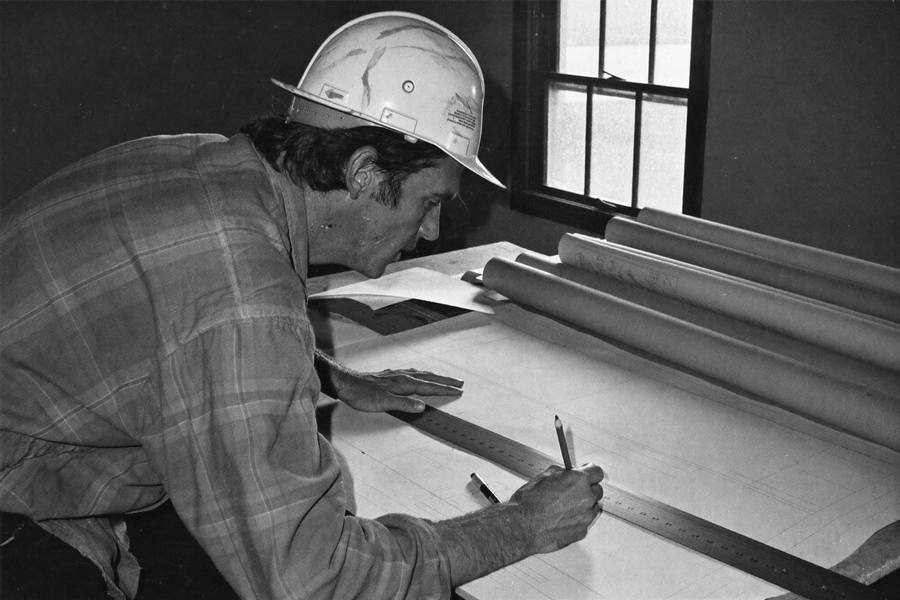
A construction estimator at a drafting table measuring a blueprint sheet with a scale ruler Construction

12 workflows—pursuit and proposals, estimating, procurement and contracts, field operations, scheduling, safety, finance, and compliance.

Workflows from general contractors, specialty trades, and construction managers. Each one starts with a document the office already produces—a spec book, a drawing set, a certified payroll report—and ends with a person signing off.

Chasing the work

  • Go or no-go before anyone reads three hundred pages

    Business development

    How it works

    ProblemA public solicitation runs hundreds of pages across a base document and nine amendments, and the details that kill a pursuit hide in the appendices. Someone reads all of it, summarizes it verbally, and the call gets made on feel under deadline pressure.

    • Starts fromThe solicitation and every one of its amendments
    • You getA scored go/no-go workbook, with a page citation behind every score
    • Signed byThe pursuit committee, which overrides any score and makes the call

    What AI doesReads the solicitation and every amendment, scores the firm’s own go/no-go factors with a page citation behind each score, finds comparable past projects, and writes a scoring workbook with a tier and an estimated pursuit effort.

    What you needThe solicitation document and all amendments; attachment and evaluation-criteria exhibits; your past pursuit portfolio and win-loss history; client relationship history and current pipeline.

  • Every RFP requirement mapped, and checked back at the end

    Proposal manager

    How it works

    ProblemOne person retypes every submission requirement into a spreadsheet, assigns owners and backs a schedule out from the due date. Before submittal someone cross-checks the whole proposal by hand, and missing a single requirement can disqualify the bid.

    • Starts fromThe RFP and its submission instructions
    • You getA requirements matrix with an owner on every line, and a compliance check of the finished proposal
    • Signed byThe marketing lead, who certifies compliance before the proposal ships

    What AI doesPulls every requirement with its page limit, maps it to a response section and an owner, hands each author a starter file carrying that section’s requirements and the past content it found, then checks the finished proposal back against the list and marks each item answered, partial or missing.

    What you needThe RFP, its amendments, and submission instructions; evaluation criteria and page limits; past submitted proposals and the content library; the pursuit team roster and availability.

Pricing and contracts

  • Material lists straight off the drawing set

    Estimator

    How it works

    ProblemSomeone reads the set fixture by fixture, scaling runs and counting fittings into a spreadsheet. Every ordering and pricing mistake downstream starts with that count.

    • Starts fromThe drawing set and equipment schedules you already produce
    • You getA quantity list—item, tag, size, material, and count—in your estimating format
    • Signed byThe estimator, who owns the number that goes in the bid

    What AI doesReads the drawings, riser diagrams, and equipment schedules and produces a quantity list—item, tag, size, material, and count—in the format the estimator already prices from, marking anything it cannot read for field verification instead of guessing.

    What you needDrawing sets, riser diagrams, and process diagrams; fixture and equipment schedules; handwritten field takeoff notes; your own takeoff or estimate template; historical job cost by cost code.

  • Trade scope packages out of the spec book

    Procurement lead

    How it works

    ProblemScoping one trade means reading a thousand-page spec book and hundreds of sheets by hand. What gets missed—sealants, a permit, who pulls the wire—becomes an argument in the field.

    • Starts fromThe spec book and the drawing set
    • You getYour own scope sheet, filled in, with every requirement cited to a spec section and sheet number
    • Signed byThe procurement lead, who resolves every unowned and double-owned section

    What AI doesIndexes the spec book and drawing set, finds the pages that matter for one trade, and fills the firm’s own scope sheet with each requirement cited back to a spec section and sheet number—flagging sections no trade owns and sections two trades both claim.

    What you needThe full specification book, organized by division; the drawing set; your master scope sheet template; the planned list of trade packages; the signed subcontract and its exclusion list, where one exists.

  • Subcontracts read against your own risk checklist

    Owner and attorney

    How it works

    ProblemLender consent and assignment agreements run pages of dense language, and one missed clause can bind you to keep working after the general contractor defaults, or quietly waive lien rights. A signed subcontract will name spec sections as your scope while an exclusion list carves work back out—and nobody reconciles the two before signing.

    • Starts fromThe subcontract, its exhibits and the exclusion list
    • You getEach risky clause quoted and rated, sorted into accept, negotiate or escalate, with counter-language drafted in your house style
    • Signed byThe owner and the attorney, who decide what to redline and whether to sign

    What AI doesRuns each document against a written checklist of risk categories specific to the trade, quotes the actual clause, rates the exposure high, medium or low, and sorts every term against the firm’s own written acceptable ranges. Read alongside the spec book it produces a scope table: what you own, what is excluded, what the spec assigns to others, and the contradictions to get in writing before signing.

    What you needThe subcontract with its exhibits and exclusion list; lender consent and assignment agreements; the prime contract where available; the full specification book; a written guardrails document of acceptable ranges and previously accepted language.

Running the job

  • The submittal register, built from the specs

    Project engineer

    How it works

    ProblemAt project start an engineer walks every spec section hunting for submittal requirements and types them into a register. About a week of work, and anything missed surfaces months later as a late submittal.

    • Starts fromThe spec book and the schedule’s install dates
    • You getA register with each item’s section reference, type and required-by date, and the long-lead items flagged
    • Signed byThe project engineer, who performs the review of record and stamps the submittal

    What AI doesWalks every spec division, pulls each required submittal with its section reference and type, works the required-by date back from the install date in the schedule, flags long-lead items, and reports any section where it found nothing.

    What you needThe full specification book and any amendments; the project schedule install dates; subcontract scope assignments; submittal packages and product data; referenced material test standards.

  • The three-week look-ahead, off the handwritten board

    Superintendent

    How it works

    ProblemA superintendent crosses off work and pencils dates onto a printed template, then someone types it all up again for the subcontractor meeting.

    • Starts fromThe marked-up template, or a photograph of the planning board
    • You getThe updated look-ahead, the meeting agenda and a sign-in sheet, with critical-path and weather-sensitive work called out
    • Signed byThe superintendent, who confirms activities, crews, and dates before the pack goes out

    What AI doesReads the marked-up template or a photograph of the planning board alongside the schedule export, and produces the updated look-ahead, the meeting agenda and a sign-in sheet, with critical-path activities and weather-sensitive work called out.

    What you needThe scanned handwritten look-ahead template or a photo of the planning board; the critical-path schedule export; subcontractor meeting notes; zone and floor plans.

  • Daily field logs turned into the weekly owner report

    Project manager

    How it works

    ProblemSuperintendents type weather, crews, tasks, and photos into the project system every day—then someone re-types the same week into a template, drags the photos across, resizes them, and rewrites the narrative from memory. And every superintendent emails a separate spreadsheet that someone copies into a master sheet every Monday.

    • Starts fromThe week’s daily logs and site photos
    • You getThe owner report drafted into your standard template—progress, issues with what is being done about each, and the look-ahead
    • Signed byThe project manager, who edits the draft and decides what actually goes to the owner

    What AI doesTakes the week’s daily logs and photos and drafts the owner report into the standard template, marking anything it could not find so a person fills the gap. It also lets a foreman dictate the whole daily entry once from a phone—project, date, trade, crew size, work completed, open questions, and near misses—and merges the weekly spreadsheets into one sheet with the source noted on every row.

    What you needDaily logs entered by superintendents; site photos; the previous week’s report and the blank template; weekly work-report spreadsheets from each superintendent.

  • The safety paperwork that gates a job start

    Safety lead

    How it works

    ProblemNo work starts until the hazard analysis clears five sets of hands, which can take a month. Status lives only in how someone renamed the file.

    • Starts fromThe subcontractor’s draft hazard analysis and the project brief
    • You getA pre-filled cover sheet, the draft read against the hazards past reviews have rejected, and a status view readable from a phone on site
    • Signed byThe safety lead, who accepts every hazard analysis personally—it is a liability decision, so it is never automated

    What AI doesPre-fills the cover sheet from project records, reads the subcontractor’s draft against the hazards and permits past reviews have rejected, and shows what is sitting at which stage and what is past its review window, readable from a phone on site.

    What you needThe subcontractor’s draft hazard analysis and cover sheet; certification and competent-person documents plus the daily crew list; the company safety manual and the general contractor’s requirements; a project brief naming the site, trades, and hazards; prior accepted analyses and rejection history.

  • What moved in this month’s schedule

    Scheduler

    How it works

    ProblemA schedule update arrives and nobody can say precisely what moved. When the owner asks why the completion date slipped, the answer comes from memory. Writing the formal monthly narrative runs two to three hours on a heavy project, and reformatting the raw period-comparison export alone takes an hour or more.

    • Starts fromThe current and prior schedule exports
    • You getA movement report—activities added and deleted, date and logic changes, milestone slips, and the chain behind the slip—plus your narrative’s data-driven sections
    • Signed byThe scheduler, who writes the judgment sections and decides whether a trend warrants escalation

    What AI doesCompares two schedule exports and reports activities added and deleted, duration and date shifts, logic and status changes, milestone slips, and the net movement of the completion date, with the chain behind the slip. From a single export it also calculates schedule performance, a compression index and a quality grade against recognized scheduling standards, and produces the milestone table, the longest path and the revision list in the firm’s own long or short form.

    What you needCurrent and prior schedule exports; the baseline schedule and contract milestones; your narrative template and the prior month’s narrative.

Billing and closing out

  • The monthly card statement, split and coded

    Cost accountant

    How it works

    ProblemOne consolidated card statement covering dozens of cardholders gets split by hand, a coding request emailed to each person, late responders chased, then every returned receipt matched back to a transaction and re-sorted into statement order. On top of that, cost codes have to be checked and sales tax treatment verified state by state.

    • Starts fromThe consolidated monthly statement and the cardholder roster
    • You getOne coding packet per cardholder, the chase emails drafted, receipts matched to transactions, and an exception report with a confidence score on each line
    • Signed byThe cost accountant, who works the exception queue—nothing posts to the accounting system without a person releasing it

    What AI doesSplits the statement into one coding packet per cardholder, drafts each request email with the right attachment and due date, tracks who has not replied and sends reminders, then matches returned receipts to transactions on vendor, date, and amount within tolerance. It checks cost codes and per-state tax treatment and hands back an exception report with a confidence score on each transaction.

    What you needThe consolidated monthly card statement; the cardholder roster and email rules; returned receipts and coding responses; the valid cost code list and state tax rules.

  • Certified payroll checked against the wage determination

    Compliance auditor

    How it works

    ProblemEvery week a compliance team hand-reads roughly five hundred pages of subcontractor payroll, checking each worker’s classification, rate and fringe against the wage determination for that job.

    • Starts fromThe weekly certified payroll documents and the job’s wage determination
    • You getAn audit workbook with every underpayment written up, classification by classification
    • Signed byA compliance auditor, who decides what is a real violation—the signed workbook is the record

    What AI doesReads each page—including the non-standard formats subcontractors send—matches every classification to the right line on the wage determination, recomputes the required rate including fringe, and writes each underpayment into an audit workbook.

    What you needWeekly certified payroll documents from subcontractors; the wage determination rate table for the job; the pay-period and subcontractor list per job.
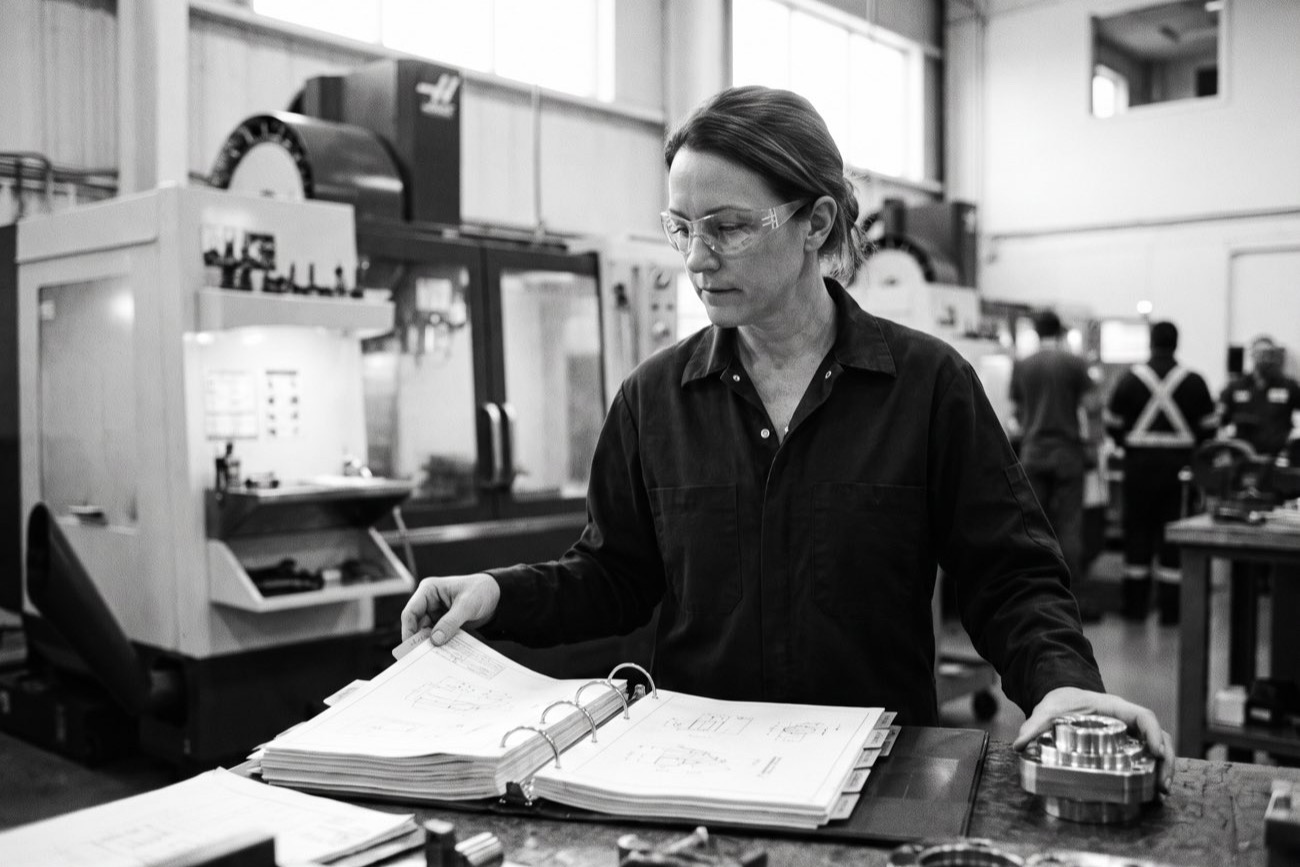

A quality engineer in safety glasses working through a tabbed specification binder at a bench beside a CNC machining center, a machined part under her hand Manufacturing

11 workflows—quoting, scheduling, purchasing, inventory, quality, documentation, technical service, and reporting.

Workflows from real plants—job shops, contract manufacturers, and specialty chemical and regulated equipment makers. Each one starts with paper the plant already produces: a request package, a batch ticket, a work instruction.

Quoting and scheduling

  • The quote drafted before the estimator opens it

    Estimator

    How it works

    ProblemOne or two people hold the pricing knowledge for the whole company. They read drawings, wirelists and material specs by hand, then price at partial information because waiting for the rest loses the job. If either of them leaves, the ability to quote leaves with them.

    • Starts fromThe customer’s request package, however it arrives
    • You getA draft quote with every assumption and comparable past job shown beside it
    • Signed byThe estimator, who sets the final price and owns the competitive judgment the draft cannot make

    What AI doesReads the request package, pulls out the parts and operations, matches each line to the item master and to comparable past jobs, brings back what those jobs actually consumed in labor and material, and hands over a draft quote with every assumption shown next to it.

    What you needThe customer request package, whether it arrives by email, portal, phone or fax; drawings, wirelists and material specifications with revision levels; two to three years of historical quotes; recorded run times and labor rates by process step; the item master and supplier pricing.

  • What a rush order costs everyone else

    Operations manager

    How it works

    ProblemEvery expedite request gets accepted, with no analysis and usually no premium. Rebuilding the schedule to see the damage takes too long, so nobody finds out which other customers just slipped until those orders are late too.

    • Starts fromThe current schedule and the requested order with its target date
    • You getThe full cascade—which orders pull in, which push out, by how many days, and which customer each one belongs to
    • Signed byOperations and the general manager, who decide whether to accept the expedite and what to charge for it

    What AI doesRe-sequences the schedule with the rush order moved and shows exactly which orders pull in, which push out, by how many days, and which customer tier each belongs to—before anyone answers the customer.

    What you needThe current schedule; the requested order and its target date; customer priority tiers; machine capacity and minimum efficient run size.

  • The production schedule rebuilt whenever something changes

    Production control

    How it works

    ProblemThe whole build sequence lives in one person’s spreadsheet. Rebuilding it takes a couple of hours, so it happens monthly—accurate for three to five days and stale for the rest. The person who maintains it is the only one who understands it.

    • Starts fromOpen orders and material status out of your business system
    • You getA dated schedule with projected ship dates and the at-risk orders called out
    • Signed byThe operations manager, who overrides the sequence wherever they know something the data does not, then releases it to the floor

    What AI doesPulls open orders and material status out of the business system, sequences them against daily labor capacity, the working-day calendar and any batching rules, and produces a dated schedule with projected ship dates and the at-risk orders called out.

    What you needOpen order lines with estimated production hours and required dates; component availability and vendor delivery dates; daily labor capacity by staffing level; batching and sterilization rules; the working-day calendar and holidays.

Buying and finding material

  • Quote requests out to suppliers who are still approved

    Buyer

    How it works

    ProblemA job lands as twenty-five pages of requirements covering more than five hundred parts. A buyer types each part number into the system, reads the purchase history, then writes a separate quote email—five hundred times. Worse, the history will happily hand back a supplier removed from the approved list years ago for bad quality or bad delivery.

    • Starts fromThe multi-page job requirements document
    • You getA ready-to-send quote request for each vendor, with removed suppliers left out and the rest ranked on their own delivery and quality record
    • Signed byThe buyer, who approves the vendor list, edits every draft before it is sent, and makes the award

    What AI doesParses the requirements document into a part list, pulls each part’s purchase history, pricing and lead times, drafts a quote request per vendor, and leaves out any supplier no longer on the approved list—ranking the rest on their own delivery and quality record.

    What you needThe multi-page job requirements document; part purchase and pricing history; the approved supplier list and the reasons vendors were removed; supplier delivery and quality records.

  • Finding the inventory the system says you have

    Inventory control

    How it works

    ProblemOn-hand balances show too much or go negative. Material ships without being scanned out and never gets reordered. Stock put away in the wrong place gets ordered again. Downstream, an order comes up short and someone spends the better part of an hour digging through five disconnected systems, often without an answer.

    • Starts fromScan events, work tickets, shipments, and receipts
    • You getA daily exception list naming the item, the location and the missing scan behind each variance
    • Signed byInventory control, who physically verifies each exception and approves any adjustment

    What AI doesCross-checks scan events against work-ticket consumption, shipments, and receipts, and produces a daily exception list naming the specific item, location and missing scan behind each variance. For an order that comes up short it pulls the trail from every system into one timeline and names the most likely point of loss.

    What you needScan events at receiving, put-away, picking, and shipping; work tickets and their material requirements; production counts by stage and waste logs; cycle count results.

The paperwork the plant runs on

  • The handwritten paperwork read, then the typing checked

    Quality supervisor

    How it works

    ProblemBatch tickets, bills of material and test certificates are filled in by hand or arrive as scans. A fraction gets keyed in, nobody independently checks it, and a transposed figure survives into purchasing or onto a certificate.

    • Starts fromThe scanned page, however it was filled in
    • You getA structured record, plus a report of every line where a second reading disagrees with the first
    • Signed byA supervisor or chemist, who reviews every flagged field and every mismatch before the record is accepted

    What AI doesReads the scanned page and extracts the values into a structured record, then runs a separate pass that reads the original again and compares it to the extracted table, reporting every line where the two disagree and every field it could not read confidently.

    What you needScanned handwritten batch tickets and bills of material; supplier and outside-lab test certificates; the matching records already keyed into the business system; standard operating procedures.

  • The work instruction written from a recorded walkthrough

    Training lead

    How it works

    ProblemThe person who runs the machine knows the sequence, the settings and the checks. Writing one procedure takes days plus weeks of approval, and gathering the screenshots is the worst part—so it never gets done, and the knowledge stays with whoever is closest to retirement.

    • Starts fromA recording of the expert talking through the job
    • You getA numbered procedure in your own template, with safety gear, setup values, run steps, and quality checks filled in
    • Signed byThe expert, who corrects the draft before it goes through normal controlled-document approval

    What AI doesTurns a recording of the expert talking through the job into a numbered procedure in the company’s own template, with the safety gear, setup values, run steps, quality checks, and referenced document numbers already filled in.

    What you needA voice or screen recording of the task being performed; your standard operating procedure template; tool, equipment and document registers; existing related procedures.

  • Which documents a procedure change breaks

    Quality manager

    How it works

    ProblemProcedure manuals and shop paperwork go back nearly two decades, and plenty of it has not been touched since. When a requirement changes, finding every downstream document is a manual hunt. After an acquisition there are two full procedure sets to reconcile against each other.

    • Starts fromThe proposed change and the governing quality standard
    • You getA compliance read on the new wording, and every downstream document that has to be revised, ranked by risk
    • Signed byThe quality manager, who verifies every flagged document—the tool has been wrong about processes the company does not even run, so nothing publishes without a person

    What AI doesReads the proposed change against the governing quality standard and the whole internal document set, says whether the new wording still complies, and lists every downstream document that has to be revised, with each gap ranked by risk.

    What you needThe proposed procedure or work instruction change; the governing quality standard; existing procedure manuals, work instructions and shop paperwork; an acquired company’s procedure set where relevant.

  • Safety data sheets drafted from the vendor sheet

    Safety specialist

    How it works

    ProblemEach sheet is built by hand: pull the vendor sheet, key in identifiers and hazard classifications, set storage conditions, recalculate for the region’s rules, generate it in every required language. Most new requests are close to an existing item, but finding the right sheet to copy depended on one person’s memory of a catalog of thousands—and that person was weeks from retiring.

    • Starts fromThe vendor safety data sheet and the component list
    • You getThe nearest existing sheet identified with its differences shown, the compliance fields drafted, and the open questions named
    • Signed byThe safety specialist, who chooses the source sheet and approves every hazard classification before a sheet is issued or a label printed

    What AI doesReads the vendor sheet and the component list, finds the nearest existing sheet on composition and concentration and shows what differs, drafts the fields the compliance system needs, and asks for the few it cannot determine. It proposes the internal hazard code from the company’s own coding rules, showing the passage it relied on.

    What you needVendor safety data sheets; the component and formula list with identifiers; your existing sheet library; internal hazard code definitions and regional classification rules.

Answering questions

  • Product questions answered out of your own documents

    Technical services

    How it works

    ProblemA small technical team fields hundreds of calls a month on cure times, substitutions and compatibility, answering from memory and a shared drive. New hires learn by interrupting whoever has been there longest.

    • Starts fromYour own data sheets, manuals, bulletins, and procedures
    • You getAn answer with the document and section cited behind every statement
    • Signed byA technical services or quality person, who verifies the cited source before anyone advises a customer—it never speaks to a customer directly

    What AI doesAnswers from the company’s own data sheets, manuals, bulletins, and procedures, citing the document and section behind every statement—and says plainly when the source documents do not cover the question instead of guessing.

    What you needProduct data sheets and technical bulletins; application manuals and installation guides; the quality manual and standard operating procedures; a test set of the real questions the team actually gets.

  • Your sales and production history, asked in plain English

    Finance

    How it works

    ProblemEvery question about sales, margin or backlog waits on the one or two people who know how to get a report out of the business system, and then the same spreadsheet gets rebuilt for the next question. Managers stop asking.

    • Starts fromOrder and invoice history at line level
    • You getAn answer to a plain-language question, and where each number came from
    • Signed byFinance, which owns the data dictionary—anyone acting on an answer checks it against the source record first

    What AI doesLoads cleaned order and invoice history with product family, margin and packaging attributes attached, then answers questions typed in plain language—family trends, what-if comparisons, which accounts moved—and shows where each number came from.

    What you needOrder and invoice history at line level; product family, margin and packaging attributes; a written data dictionary; existing report definitions and saved queries.

A warehouse worker handing a printed sheet to a colleague at the shipping dock, pallet racking and a forklift behind them Distribution

11 workflows—quoting, engineering, order entry, purchasing, shipping, field service, finance, and reporting.

Workflows from distributors and industrial dealers. This is our newest library and the picture is mixed—a few of these run daily, others are earlier. Each one starts with a document already crossing somebody’s desk: a purchase order, a quote, a layout drawing.

Quoting the job

  • Vendor pricing onto the quote without a week of email

    Inside sales

    How it works

    ProblemA large multi-line request means emailing five to eight vendors, waiting days, then hand-comparing what comes back line by line. Lines with no cost yet stall the whole quote while somebody chases one vendor at a time.

    • Starts fromThe quote lines still missing a cost
    • You getThe request emails drafted per vendor, and one comparison sheet ranking sources on price, lead time, and stock
    • Signed byThe rep or engineer, who sends the requests, picks the vendor, sets the margin per line, and decides whether the quote is worth pursuing at all

    What AI doesFinds the lines still missing a cost, groups them by vendor, and drafts the request emails with part numbers, quantities, and the date needed. As responses come back it matches them to the right lines and ranks the possible sources by price, lead time, and stock position in one comparison sheet.

    What you needMulti-line customer requests for quote; vendor catalogs and quote responses; quote lines with blank costs; prior order history for the same items.

  • The layout drawing counted, the quote package drafted

    Applications engineer

    How it works

    ProblemEngineers spend much of the day counting components off the layout by hand, building the bill of materials, then retyping all of it into a proposal. Quotes take weeks and orders go to whoever answered first.

    • Starts fromThe layout drawing and its standard component blocks
    • You getThe bill of materials, the costing sheet, the vendor quote requests, and a proposal the engineer edits
    • Signed byThe engineer, who verifies the counts and the bill of materials and signs the proposal before it reaches the customer

    What AI doesReads the layout drawing, counts the components, builds the bill of materials and the costing sheet, drafts the request for quote to each manufacturer, and turns the returned pricing into a proposal the engineer edits rather than writes from scratch.

    What you needLayout drawings with standard component blocks; component and block libraries; manufacturer pricing; customer specifications.

  • The governing spec reconciled against the component specs

    Engineer

    How it works

    ProblemA project’s governing specification overrides component specifications across dozens of engineering parameters. An engineer reads both side by side and compiles the conflicts by hand, holding the order of precedence in their head. Missed parameters turn into wrong deliveries, rework and contract exposure.

    • Starts fromThe governing specification and the component specifications
    • You getA log classifying every conflict, override, selection, and clarification, plus a plain-English paragraph for the quote
    • Signed byThe engineer, who signs off on every classified deviation and approves the customer-facing wording

    What AI doesPulls the engineering parameters out of both documents, applies the customer’s stated order of precedence, and produces a log classifying every conflict, override, selection, and clarification, plus a plain-English paragraph for the quote or the order acknowledgement.

    What you needGoverning specification documents; component-level specification documents; prior deviation logs.

Taking the order

  • An incoming purchase order becomes an open order

    Order coordinator

    How it works

    ProblemOrders land in a shared inbox or off the fax, every customer laying them out differently. Someone works out which attachment is the order and retypes it, and the awkward multi-line ones get put down and sit.

    • Starts fromThe inbound email and whatever the customer attached
    • You getThe order record opened, with a summary of what it could not read
    • Signed byThe order coordinator, who checks the extracted lines against the original before anything moves downstream

    What AI doesReads the inbound email, recognizes which attachment is the purchase order, pulls the header and every line out of whatever layout the customer used, finds the matching quote, and opens the order record with a summary of what it could not read.

    What you needInbound order emails; customer purchase orders as PDF, from email and fax; the internal quote workbook; customer and item records.

  • The order checked against the quote, terms screened

    Order coordinator

    How it works

    ProblemThe order has to match the quote on price, quantity and description, and the quote has to still be current. Payment, warranty and liability terms each route to a different owner. Missed terms are the reason this control exists in the first place.

    • Starts fromThe customer order, the quote workbook and your escalation rules
    • You getA line-by-line comparison, the quote’s age, and a routing note drafted to the named approver for each flag
    • Signed byThe named approver, who decides. No term is accepted automatically

    What AI doesCompares the order to the quote line by line on price, quantity and description, checks how old the quote is, reads the terms against the written escalation rules, and drafts the routing note to the named approver for each flag.

    What you needCustomer purchase orders; customer terms and conditions documents; the internal quote workbook and quote date; your escalation matrix; vendor order acknowledgements.

  • The order setup record and the handoff email

    Order coordinator

    How it works

    ProblemThe coordinator hand-maps dates, trades, assigned engineer, and milestone flags from the quote workbook, with values buried in nested tabs. Then the handoff email is rebuilt from a cheat sheet every time, and the separate payment-milestone email gets forgotten.

    • Starts fromThe quote workbook, detail tabs and all
    • You getThe setup record filled in, stopping on any mandatory field still missing, and the handoff email drafted with the right people named
    • Signed byThe coordinator, who reviews the record, corrects the assignments, and presses send

    What AI doesReads the quote workbook and fills the setup record, including the values buried in the detail tabs, stopping on any mandatory field still missing—then drafts the handoff email with the right recipients named and the order attached, plus the milestone email when that flag is set.

    What you needThe quote workbook and its detail tabs; the order setup template; routing rules by trade and build location; the customer purchase order.

Buying, shipping, and service

  • What to stock, and what has already gone dead

    Purchasing

    How it works

    ProblemStocking is decided by manual review and supplier lead times are tracked inconsistently, so the business swings between overstocking slow movers and losing sales to stockouts. Stock bought against a customer’s projected annual usage goes dead the moment that customer buys three instead of twenty, and nobody tells the rep.

    • Starts fromSales and usage history, inventory on hand, and supplier lead times
    • You getProposed reorder points and order quantities, plus dead customer-reserved stock ranked by value and age
    • Signed byPurchasing approves the stocking changes; the rep decides whether to push the customer, re-stock the item, or write it off

    What AI doesCombines sales history, inventory on hand and supplier lead times to propose reorder points and order quantities, and separately finds customer-reserved stock with no movement, ranks it by value and age, and puts it in front of the assigned rep with that customer’s actual buying pattern attached.

    What you needSales and usage history by item and customer; inventory levels with customer association; supplier lead times; the original stocking projections.

  • Picking by the date the customer needs it

    Shipping lead

    How it works

    ProblemPick tickets sort by when the ticket was created, not by when the customer actually needs the product. The team works the oldest ticket while a same-day need sits behind it, and the report that flags unconfirmed tickets shows ticket age rather than delivery urgency.

    • Starts fromThe open pick queue and the required dates on the sales orders
    • You getThe queue re-sorted by delivery urgency, with anything at risk of missing its window or carrier cut-off flagged
    • Signed byThe shipping lead, who sets the day’s pick order and can override the ranking to consolidate shipments or hit a cut-off

    What AI doesPuts the customer’s required date on the pick ticket and re-sorts the open queue by delivery urgency instead of ticket age, flagging anything at risk of missing its window or its carrier cut-off.

    What you needOpen pick tickets; customer required dates on the sales order; carrier cut-off times.

  • The technician coached before the ticket submits

    Billing coordinator

    How it works

    ProblemMore than sixty customer and national-account rule sets dictate which photos, meter readings, dollar caps, and signatures a job needs. Technicians miss items, coordinators reopen jobs, and incomplete tickets turn into write-offs and unpaid invoices.

    • Starts fromThe technician’s job entry, photos and time logs
    • You getA prompt in the app for the missing photo, reading, signature or note before the ticket can be submitted
    • Signed byThe technician, who still writes the work description, and the billing coordinator, who still approves the ticket before it is invoiced

    What AI doesKnows which rules apply to this customer and this job type, prompts the technician in the app for the missing photo, reading, signature or note before the ticket can be submitted, and tidies garbled voice notes into a clear repair description.

    What you needTechnician job entries, photos and time logs; customer and national account guidelines; voice-to-text job notes.

Finance and reporting

  • The three-way match on supplier invoices

    Accounts payable

    How it works

    ProblemMatching the purchase order to the receipt to the invoice is done on paper. A stock invoice can run fifteen to twenty pages against several receipts, and the documents are spread between a file room, the parts counter and the accounts payable inbox. Vendors go past due while the paperwork is walked around the building.

    • Starts fromThe invoice, the receipt and the purchase order—scanned paper included
    • You getA line-by-line match, with each variance sent to the department that owns it and the disagreeing lines attached
    • Signed byAccounts payable, which approves every match and signs off on how each variance is resolved before any payment is released

    What AI doesReads the invoice, the receipt and the purchase order, including scanned and photographed paper, matches them line by line, and sends each variance to the department that owns it with the specific disagreeing lines attached.

    What you needVendor invoices as PDF, scanned and paper; receiving documents; purchase orders; the accounts payable inbox.

  • Asking the system a question instead of filing a report request

    Finance

    How it works

    ProblemManagers cannot get at their own numbers. Custom reports break every time the business system is updated, so every question goes back to IT and waits—which items are dragging margin down, when this customer last bought, gross profit by branch or by manufacturer.

    • Starts fromInvoice, inventory and general ledger data
    • You getAn answer to a plain-English question with the query behind it, so a margin question can be followed down to the line
    • Signed byFinance, which checks the figures against the system of record before they are used in a close, a management review, or anything a customer sees

    What AI doesSits on top of the business system’s invoice, inventory and general ledger data and answers plain-English questions with both the numbers and the query behind them, so a manager can follow a margin question down to the line without filing a report request.

    What you needInvoice and invoice-line data; general ledger transactions; inventory and sales history.

A practical next step

Bring one question, goal, or bottleneck. Leave with greater clarity.

In a 60-minute working session with Dan Hughes, we’ll explore what’s on your mind, assess whether AI is relevant, and identify a practical next step—if there is one. Whether you hire us or not.